REAL ESTATE TECHNOLOGY PERSPECTIVES THAT COUNT

Behind the Raise
Blog
News
Portfolio Company Q&As
Videos
Thank you! Your submission has been received!
Oops! Something went wrong while submitting the form.
View of large cities' downtown
RET Ventures Eighth Annual Summit Blog
Sep 15, 2026
|
XX Min Read
RET Summit 2026: What’s Changing in Real Estate Technology

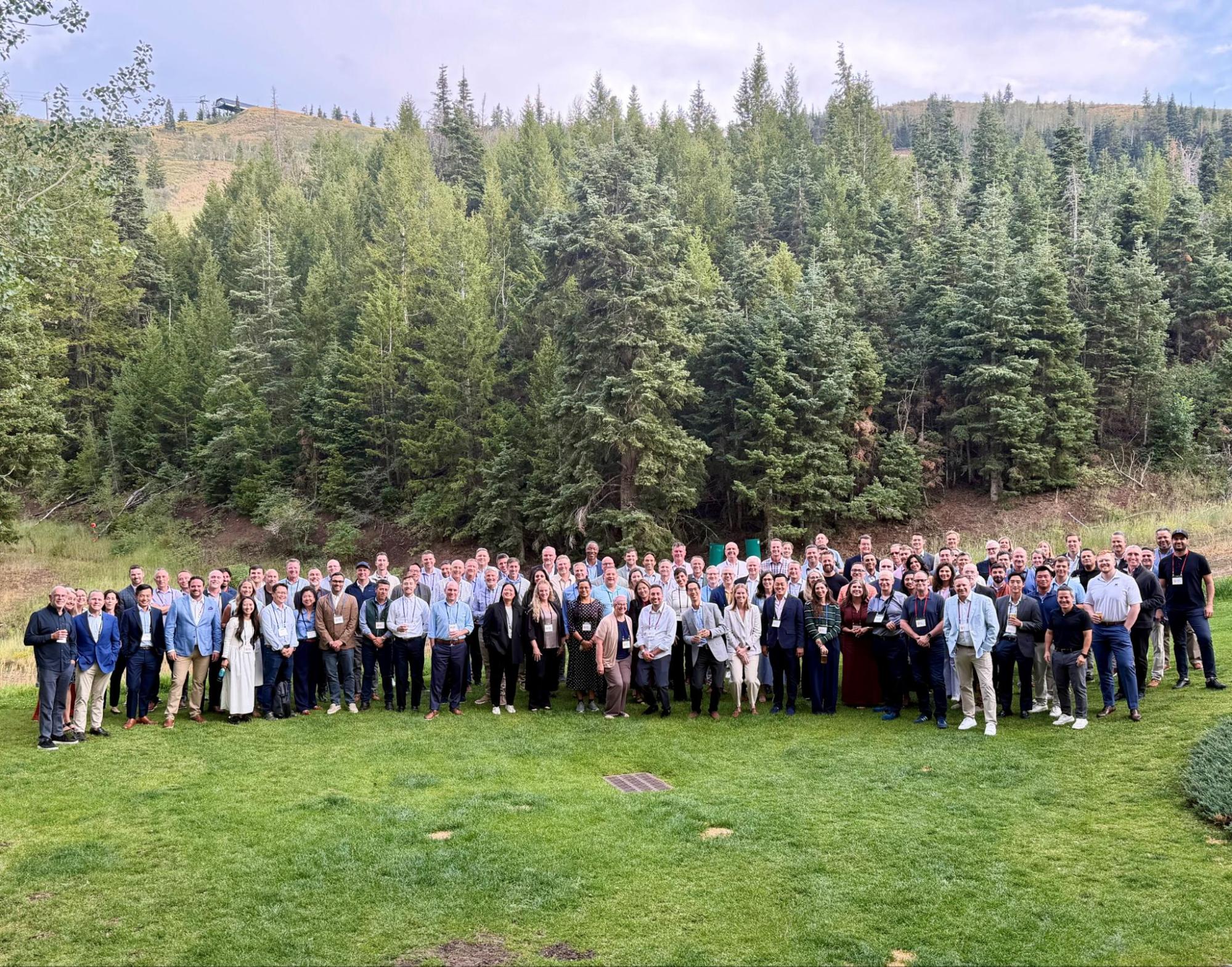
RET Ventures recently brought together more than 100 leaders, the majority of them C-level leadership, from 45 leading owners, operators and developers across its multifamily and single-family rental (SFR) Strategic Investor group for its eighth annual Summit in Park City. They were joined by a subset of RET's portfolio companies building the next generation of technology solutions for the industry.

Previous Summits focused heavily on the external — what new solutions exist and how can the group implement them. This year, that thread remains, but with increased emphasis on the infrastructure the group has been investing in and the capabilities AI is bringing to their internal teams. An important question posed was not simply what new technology to adopt, but what capabilities operators should build themselves and where they should rely on external partners. 

We also discussed the case for consolidating technology around broader platforms against the benefits of maintaining a more diverse "best of breed" technology stack and how that will evolve in a future where AI agents are more broadly deployed. Those choices need to take into account the changing economics of technology and where and how the value created by new tech will accrue, both for operators and vendors. 

The conversation around AI also felt different. The industry is moving beyond experimentation toward execution, and the ground under the stack is shifting. There is a growing focus on AI agents and the resources needed to put them to work, while operators are increasingly thinking about what it will take to move AI from experimentation into daily workflows. 

A recurring theme was the pace of change. Technologies that once seemed emerging are a routine part of the industry's day-to-day conversation, with new generations of solutions already emerging, prompting new questions about how these tools fit together, how operators can get the most value from them and whether the industry's technology infrastructure can keep up.

The three-day Summit brought together the three perspectives needed to answer those questions: operators who understand the problems firsthand, entrepreneurs building solutions and investors looking at where the market is heading. That combination is one of the things that makes the RET network particularly valuable.

We’re grateful to everyone who joined us and contributed to this year’s Summit, and we look forward to continuing the conversation.


RET Ventures Eighth Annual Summit Blog
Sep 15, 2026
|
XX Min Read
RET Summit 2026: What’s Changing in Real Estate Technology
Featured
All
Blog

RET Ventures recently brought together more than 100 leaders, the majority of them C-level leadership, from 45 leading owners, operators and developers across its multifamily and single-family rental (SFR) Strategic Investor group for its eighth annual Summit in Park City. They were joined by a subset of RET's portfolio companies building the next generation of technology solutions for the industry.

Previous Summits focused heavily on the external — what new solutions exist and how can the group implement them. This year, that thread remains, but with increased emphasis on the infrastructure the group has been investing in and the capabilities AI is bringing to their internal teams. An important question posed was not simply what new technology to adopt, but what capabilities operators should build themselves and where they should rely on external partners. 

We also discussed the case for consolidating technology around broader platforms against the benefits of maintaining a more diverse "best of breed" technology stack and how that will evolve in a future where AI agents are more broadly deployed. Those choices need to take into account the changing economics of technology and where and how the value created by new tech will accrue, both for operators and vendors. 

The conversation around AI also felt different. The industry is moving beyond experimentation toward execution, and the ground under the stack is shifting. There is a growing focus on AI agents and the resources needed to put them to work, while operators are increasingly thinking about what it will take to move AI from experimentation into daily workflows. 

A recurring theme was the pace of change. Technologies that once seemed emerging are a routine part of the industry's day-to-day conversation, with new generations of solutions already emerging, prompting new questions about how these tools fit together, how operators can get the most value from them and whether the industry's technology infrastructure can keep up.

The three-day Summit brought together the three perspectives needed to answer those questions: operators who understand the problems firsthand, entrepreneurs building solutions and investors looking at where the market is heading. That combination is one of the things that makes the RET network particularly valuable.

We’re grateful to everyone who joined us and contributed to this year’s Summit, and we look forward to continuing the conversation.

A Decade in Proptech Investing: What We Got Right, What We Learned and What’s Next
Jul 22, 2026
|
XX Min Read
Ten years ago, RET Ventures was founded on a simple idea: the best real estate technology is built in partnership with the people who use it.
Featured
All
Blog

Ten years ago, RET Ventures was founded on a simple idea: the best real estate technology is built in partnership with the people who use it.

Since then, we've invested in 47 companies and partnered with 55 of the industry's leading owners and operators, while watching the proptech landscape shift from early-stage experimentation to scaled, measurable operational impact.

Our platform now totals more than $800 million in assets under management across a network spanning more than 3.2 million rental units.

Humility and continual growth are core values at RET and essential to being a good investor. As we look ahead, we'll periodically share reflections on what we've learned over the past decade and where we believe the industry is headed. Some of our convictions have been reinforced. Others have been quietly dismantled.

Each lesson is drawn from a real investment we've made. Out of respect for the founders and companies involved, we've chosen not to identify them by name.

Lesson 1: Great Management Teams Outperform Great Market Positions

Technology matters. But repeatedly, we've found that leadership matters most. Across our portfolio, we’ve seen management teams determine whether a strong idea becomes a market leader or stalls before reaching its potential.

  • What We Got Right: From day one, market feedback consistently described a particular team as responsive, agile, and relentlessly customer-focused. That gave us confidence to back them against entrenched incumbents, reinforcing a lesson we’ve seen time and time again: exceptional execution can outperform even the strongest first-mover advantage.
  • What We Initially Got Wrong: We believed in a company’s market thesis, but execution lagged until we helped get the right leadership team in place. After two management changes, we found the right people for the right seats. The company’s robust balance sheet helped, but stronger leadership ultimately transformed execution and the customer experience. With the right team in place, the business was able to capitalize on growing market demand, strengthen customer retention and gain share while competitors struggled to execute profitably.

Bottom Line: We'd rather back an exceptional team entering a competitive market than a mediocre team chasing a perfect opportunity.


Lesson 2: Capital Does Not Equal Success

Capital helps good companies grow. It rarely fixes weak businesses. That's why we've never confused fundraising momentum with business quality. Time and again, we’ve found that the companies creating the most durable value aren’t always the ones raising the biggest rounds.

  • What We Got Right: One of our strongest investments wasn’t the loudest company in the market, but it solved a clear operational challenge with a product customers genuinely needed. Focused execution, customer adoption and strong core unit economics created lasting value for both the business and our investors.
  • What We Got Wrong: In another investment, we joined an oversubscribed funding round at a premium valuation in a category where we had limited ability to leverage our owner-operator network or validate demand. Despite significant capital raised, the business ultimately struggled to build a sustainable model, reinforcing that capital alone cannot overcome weak fundamentals.

Bottom Line: Cheap capital is temporary, disciplined unit economics are permanent. Fundraising is a milestone, not a measure of success. Our strongest investments come from differentiated insight through our partnership network, not market momentum.

Lesson 3: Be Wary of Subsidized or Rate-Driven Markets

Some markets are driven by durable customer demand. Others are driven by subsidies, cheap financing or temporary market conditions. Knowing the difference matters.

The Green Energy and the SFR/retail-investor surge of 2020–2023 illustrated this dynamic. In both cases, market conditions made it harder to distinguish durable businesses from temporary winners. That’s why our 2022 bets were a mixed call. 

  • What We Got Wrong and Right at the Same Time: Overall demand for EV charging grew more slowly than expected, and mom-and-pop landlords faced steeper macroeconomic headwinds than anticipated. At the same time, well-funded competitors took advantage of cheap capital to support unsustainable spending, making it difficult for disciplined operators to compete on equal footing. Fortunately, strong management teams with lean cost structures were able to weather the changing environment, outlast competitors, and ultimately reach profitability without raising additional capital.

  • What We Got Right: Our highest-conviction investments have consistently shared the same characteristics: they solve mission-critical operational challenges, deliver measurable ROI, demonstrate strong core unit economics and are led by exceptional management teams. That combination creates the kind of durable customer demand that persists regardless of broader market cycles, which is ultimately what we look for in every investment.

Bottom Line: Market conditions change. Companies with efficient business models, strong economics and real customer value tend to endure.


Lesson 4: Great Tech isn't Always a Great Investment

Our deep partnership with 55 leading owners and operators is a key competitive advantage for us at RET. However, this dynamic can sometimes create a unique tension.

We've been right that our Strategic Investors are collaborative and have pushed the industry forward on proptech adoption. But that doesn't mean every technology our investors value makes a strong venture investment.

  • What We’ve Learned to Get Right: Our investors often value technologies that solve real operational problems but don't necessarily fit our venture model. Our job is to act as the industry expert with full transparency.
  • Our Resolved Position: We tell our investors exactly where we stand. If a technology creates meaningful operational value but isn't a compelling venture investment, we'll tell you: "It’s good for you, not for our fund." That honesty protects investor capital while strengthening our role as a trusted advisor.


Looking Ahead to the Next Decade

Ten years in, our core investment philosophy looks remarkably similar to where we started.

We continue to believe the biggest opportunities will come from companies solving real workflow problems with measurable ROI, executional excellence and leadership teams capable of navigating changing markets.

The fundamentals remain consistent:

  • Back exceptional founders.
  • Focus on customer outcomes.
  • Stay disciplined.

Those lessons have served us well for the past decade, and we believe they'll matter even more over the next ten years.

RET Ecosystem in the News

RET Thought Leadership 

  • CNBC: Christopher Yip weighs in on the widening gap in proptech venture funding, where capital is flowing to seed-stage startups and mega-rounds alike while mid-stage companies get squeezed out. Yip delves into the impact AI is having on private equity, and how the sector’s hesitancy is forcing venture investors like RET to fund their own portfolio companies through the gap.
  • Propmodo: Christopher Yip, RET Partner, explores how the real estate technology investment market has evolved following a sharp decline in funding post-2022 in a recent guest column, showcasing how the winning technologies of today are no longer defined by novelty but workflow integration, clear ROI, and measurable impact.
  • Commercial Observer: In an exclusive interview, Christopher Yip unveils the launch of RET Ventures’ AI Accelerator program and the naming of its first two participants, brightplace and LeasingAI. The program will support early-stage startups improving marketing and leasing efforts across the residential real estate journey. 

Portfolio Companies in Action

  • Addressing AI-enabled Rental Fraud: In a conversation with Bisnow on rising incidences of rental fraud and evolving screening practices, CEO and co-founder of Rent Butter, Chris Rankin, shines a light on the challenges owners face with tenant screening, and the importance of adopting tools that streamline operations and mitigate fraudulent actors.
Shaping the Future of Multifamily Leasing: RET Ventures Launches AI Accelerator
Apr 7, 2026
|
XX Min Read
The multifamily leasing landscape is undergoing a significant transformation. As generative AI seemingly permeates all aspects of everyday life, residents are increas.
Featured
All
News

A New Era in Multifamily Leasing

The multifamily leasing landscape is undergoing a significant transformation. As generative AI seemingly permeates all aspects of everyday life, residents are increasingly relying on LLM-driven platforms to discover and engage with potential rental communities, reshaping expectations for how apartments are promoted and leased. Owners and operators face a market where traditional listings and SEO-reliant strategies are no longer sufficient and AI-mediated search and recommendations are a central part of the rental journey.

This shift is fundamentally changing how demand is generated and captured. Owners must ensure that their property data is structured, surfaced and understood by the AI-driven platforms influencing where and how residents search for potential communities. For operators, this creates an urgent need to rethink digital presence and leasing strategies, and for startups, it creates a clear opportunity to build the infrastructure and tools that power this new model of apartment discovery

The RET Ventures AI Accelerator Program

In response to this evolution, RET Ventures has launched its inaugural AI Accelerator Program, designed to help early-stage startups scale solutions that directly address modern multifamily leasing and marketing challenges. The program provides a unique combination of hands-on mentorship, strategic guidance and access to RET’s unparalleled network of institutional real estate owners and operators, helping startups refine products and accelerate go-to-market readiness.

The first two members of the cohort are LeasingAI and brightplace, two companies tackling critical aspects of AI adoption in leasing. LeasingAI optimizes property visibility across major generative AI platforms like ChatGPT and Gemini, ensuring that rental listings are accurately represented and discoverable. Brightplace is building foundational data and discovery infrastructure, helping operators adapt to a renter journey increasingly influenced by AI-mediated search.

Looking Ahead: AI as a Strategic Advantage

As AI continues to redefine how residents search, evaluate and engage with properties, startups that can bridge operational needs with advanced AI capabilities will lead the next wave of innovation.

RET Ventures sees this accelerator program as a launchpad for long-term, industry-wide transformation. By fostering collaboration between entrepreneurs and institutional operators, the firm is helping ensure that AI adoption is both practical and impactful — representing a step toward a future where technology and human expertise combine to deliver better leasing outcomes, stronger resident experiences and measurable business outcomes.

To learn more about the RET Ventures AI Accelerator Program and/or submit an application for candidacy, please reach out to accelerate@ret.vc

View full press release here

Insights from the 2025 RET Ventures Blueprint Multifamily Kickoff Summit
Oct 15, 2025
|
XX Min Read
Last month, RET Ventures hosted its annual Multifamily Kickoff Summit at Blueprint in Las Vegas.
Featured
All
Blog

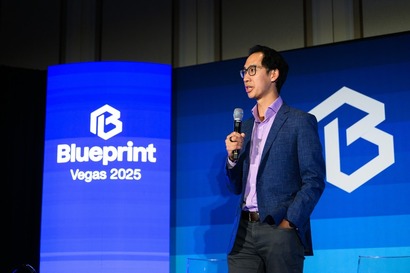
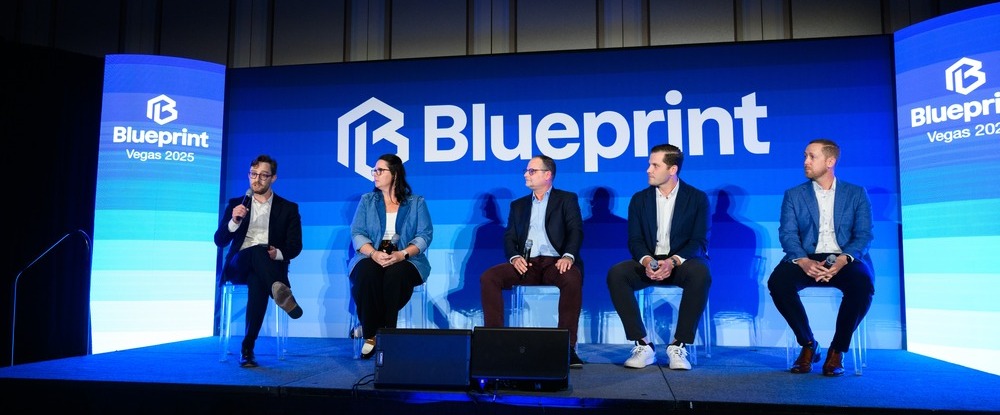
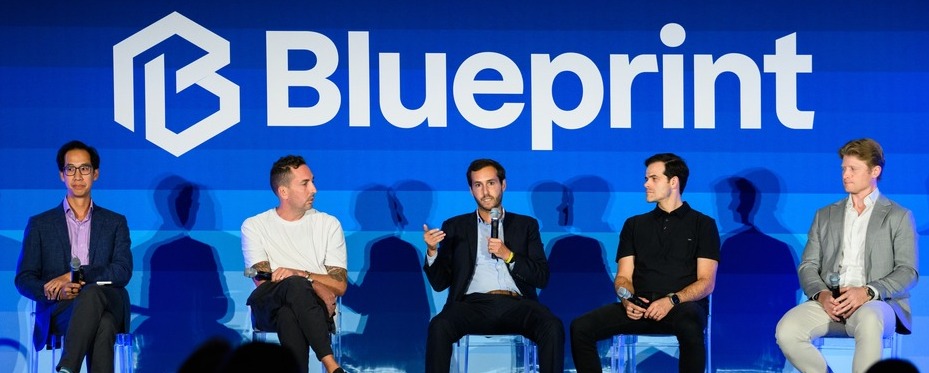
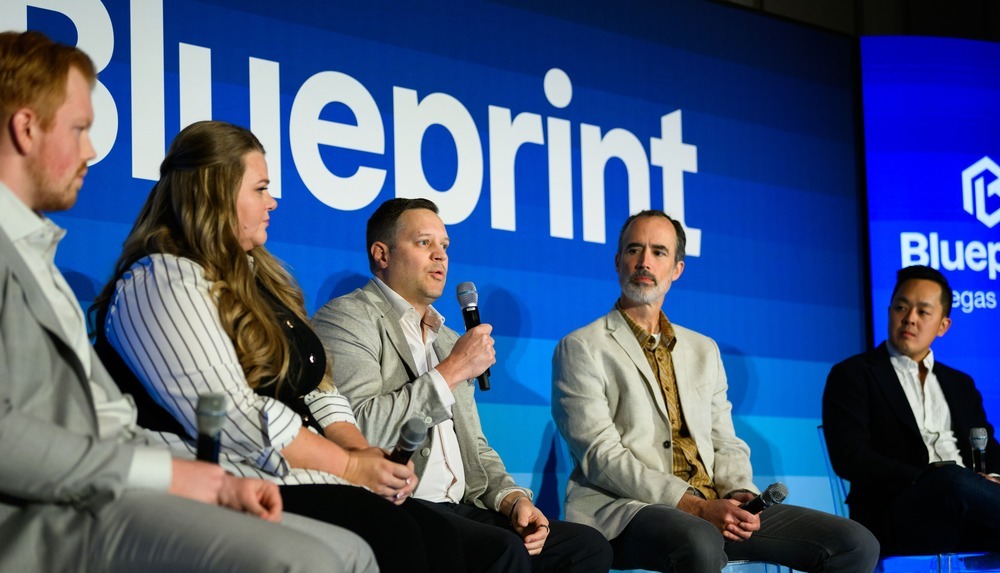
Last month, RET Ventures hosted its annual Multifamily Kickoff Summit at Blueprint in Las Vegas. The event brought together leading multifamily owners and operators, technology investors, and startup executives for an afternoon of timely discussions exploring shifting industry priorities, innovations shaping the future of the space, and market dynamics influencing technology creation, demand, and adoption.

To start the Summit, RET Vice President Jameson Hartman led a conversation titled “Doing More with Less: The ROI Imperative in Multifamily Technology,” alongside expert panelists Christi Weinstein, COO at BH Properties, Elik Jaeger, CEO & Founder at SuiteSpot, Cameron Skaff, Director of Client Strategy at Funnel, and David Walther, CRO at Asset Living.

The panel explored how multifamily owners approach technology decisions in an environment where efficiency, cost savings, and ROI are front and center. Panelists discussed the growing push toward centralization, highlighting how the most successful organizations are finding ways to achieve more with leaner teams by strategically deploying tech like automation and AI. A key takeaway from the conversation was that the true ROI of a solution depends not only on financial savings but on how well solutions align with existing workflows and empower teams to operate more effectively.

Next, RET Vice President Jaymie Fung Bingham moderated “From Data to Action: Bridging the Gap for True AI Integration,” wit insights from David Stifter, CEO & Co-Founder at PredictAP, Scott Pechersky, CTO at RPM Living, and Ian Andrews, SVP at Avanti Residential.

The discussion centered on how the industry can move beyond surface-level AI adoption to achieve real operational impact. Panelists agreed that while AI has made significant progress in real estate, true success requires connecting insights to execution. They explored how better data integration, workflow automation, and inter-system communication are essential for making AI actionable and turning analysis into tangible results.

Rounding out the event, RET Managing Partner Christopher Yip led “Investing in the Future of Multifamily Technology,” alongside panelists Kyle Johnson, VP at Volition Capital, Steve Biringer, VP of Strategy at AppFolio, Roman Pedan, CEO & Founder at Kasa, and Brandon Tobman, CEO at GetCovered.

This conversation offered a candid look at how investors and founders are navigating a maturing proptech market. The panel examined the nuances of investing in multifamily technology, where long sales cycles, integration requirements, and operator-driven feedback loops shape valuation and product development. Panelists agreed that the most promising startups are those solving real operational pain points, building measurable value for owners, and demonstrating the discipline to scale sustainably in a tighter capital environment.

In addition to the discussions at the Multifamily Summit, RET Principal Aaron Ru joined Blueprint’s SFR & BTR Summit to moderate “Scaling Smarter: Unlocking Operational Efficiency in SFR” with experts Bo Lais, CEO & Co-Founder at Lula, Jackie Lee, CEO at Brandywine Homes USA, Alex Fahsel, CEO & Co-Founder at Property Shield, and Ed Wagner, Sr. Director of Engineering at Invitation Homes.

The session explored how technology is helping SFR operators scale portfolios efficiently while improving the resident experience. Panelists shared how innovations in maintenance, leasing, and acquisition are driving performance gains across geographically dispersed assets, underscoring how tech-enabled operations are essential for the sector’s continued growth.

The Bottom Line: As the multifamily and SFR sectors continue to evolve, one theme was clear throughout the conference: technology adoption is entering a more focused, results-driven phase. Operators and investors are looking beyond hype to find tools that deliver measurable ROI, streamline operations, and enhance the resident experience. RET Ventures remains committed to driving that progress by bridging the gap between innovation and real-world application, helping shape the technologies that are defining the future of the real estate industry.

Why We Invested: The Startups Cutting Above the Noise
Oct 9, 2025
|
XX Min Read
Today’s real estate technology market is highly saturated, and many startups must compete for attention
Featured
All
Blog

Today’s real estate technology market is highly saturated, and many startups must compete for attention. Through our deep industry experience and strong relationships with leading owners and operators, we cut through the noise to back solutions that address real operational pain points and deliver immediate, measurable impact.

Here are a few of our recent investments that are transforming the real estate industry:

  • Billee: An AI-driven utility management platform purpose-built for multifamily operators and property managers, overhauling outdated manual processes, improving billing accuracy, and unlocking significant cost savings.
    • Why RET Invested: RET Ventures backed Billee because we believe the utility billing sector is ripe for disruption and Billee’s agile, AI-first solution is perfectly positioned to succeed. Their experienced management team, with a strong track record of building and scaling successful tech solutions, is focused on top-tier customer service and building a product that solves property managers' problems through automation, transparency, and accuracy.
    • Billee in Action: Early adopters of the platform have experienced up to 52% in cost savings and avoidance. In one early deployment, Billee proactively identified a critical billing error that resulted in over $200,000 of incremental recovery.
  • Crew: A home services platform designed to simplify property management by providing trash-can-to-curb services and on-demand trash removal for short-term rental owners and operators. The company, born out of founder Cameron Lam’s personal frustrations as a short-term rental owner, combines professional services with the flexibility of gig work.
    • Why RET Invested: RET Ventures recognized the immense operational value Crew was already delivering to short-term rental owners. The startup’s early traction is remarkable, and the platform has the potential to become a foundational service across a range of property types, including multifamily.
    • Crew in Action: Crew, which served just 100 properties at this time last year, now services thousands of short-term rental units nationwide. The platform currently has a strong presence in 240 cities across 30 key metro areas.
  • Property Shield: An AI-enabled platform that empowers multifamily and SFR owners and operators to prevent fraud and protect their assets. Helping detect fraudulent activity from fake listings to incidents like squatting or vandalism, Property Shield provides portfolio-wide risk scoring to help owners prioritize resources, reduce losses, and build brand trust.
    • Why RET Invested: Cybercrime in real estate is on the rise and poses a significant threat to owners and operators. RET Ventures backed Property Shield because of its ability to turn data into actionable, portfolio-wide insights and the measurable impact it delivers in preventing fraud and reducing risks for owners.
    • Property Shield in Action: Property Shield has helped clients save over $1 billion for U.S. renters and homebuyers.
Fueling the Next Wave of Real Estate Innovation
Oct 9, 2025
|
XX Min Read
RET Ventures recently welcomed its extensive network of multifamily, single-family rental (SFR), and real estate tech professionals to Park City for the seventh annual RET Summit.
Featured
All
Blog

RET Ventures recently welcomed its extensive network of multifamily, single-family rental (SFR), and real estate tech professionals to Park City for the seventh annual RET Summit. With 100+ strategic investors and 25+ portfolio companies in attendance, the three-day event underscored how quickly innovation is accelerating across the industry and highlighted the biggest challenges owners and operators are most focused on addressing today.

Key insights from the event include:

AI Continues to Reshape the Space: The real estate industry is adopting AI quickly, and innovations are moving from experimentation to real, practical use cases. For owners and operators, the focus is on AI-driven tools that support centralization and help teams do more with less through automation. What felt like “frontier days” a year ago is now embedding itself into daily workflows.

  • Where it’s working: Operators are seeing measurable gains from tools like leasing assistants that field prospect questions, conversational bots that handle resident correspondence, and “copilots” that can take on 80–90% of analyst workloads. These tools are acting less as human replacements and more like “super-analysts,” augmenting staff capacity and improving outcomes.
  • Why it matters: Nearly every new proptech solution now has an AI component. Lower startup costs and faster iteration cycles mean more companies are hitting the market, but differentiation will come from trust, accuracy, and the ability to plug into existing workflows.
  • RET’s take: RET is leaning into AI as a core driver of change, but with discipline. We look for solutions built on strong data foundations, with a clear ROI for owners and operators, and the ability to scale beyond pilots.

Streamlining the Tech Stack is a Top Priority: After years of rapid adoption post-pandemic, many owners are left with a patchwork of point solutions, each with its own separate pricing and platform. The result is redundancy, rising costs, and “app fatigue” across teams.

  • Where it’s working: The focus is shifting from experimenting with dozens of pilots to consolidating around solutions that integrate seamlessly and provide immediate value. The days of layering tool after tool are giving way to smarter, bundled approaches.
  • Why it matters: Owners are now laser-focused on efficiency and cost reduction. The companies that succeed won’t be shiny point solutions, but those that are embedded into workflows, boost efficiency, and deliver consistent ROI. As consolidation in the market picks up, operators are narrowing their tech stacks and doubling down on trusted partners.
  • RET’s take: RET is focused on backing companies that “own the workflow” and minimize change management — platforms that easily weave into the fabric of operations. These solutions are up and running with limited costs or delays and become indispensable, streamlining tasks across portfolios and reducing costs while improving the user experience for teams and residents alike.

Resident Experience Cannot be an Afterthought: From apartment search to lease renewal, renters encounter too many steps and disconnected systems. Owners see this friction as a key barrier to retention and a critical area for improvement.

  • Where it’s working: Operators are streamlining day-to-day interactions with residents through tools that centralize maintenance requests, amenity scheduling, billing, and other communications. Automated systems can now handle routine inquiries, while dashboards give staff a single view of resident activity, enabling faster issue resolution and more consistent service.
  • Why it matters: With rent growth slower than in past years, renewal and retention are top priorities. Operators want technologies that make the renter journey seamless — fewer roadblocks when finding an apartment, smoother onboarding, and easier renewals. A positive resident experience is now viewed as a direct driver of financial performance.
  • RET’s take: RET is backing companies that streamline touchpoints across the renter lifecycle, making interactions more efficient without disrupting residents’ lives. This means eliminating redundant steps – for example, using back-end insights so a resident who has already been screened for leasing does not need to be screened again for renters insurance. In today’s environment, the winners will be solutions that deliver convenience, build trust, and strengthen the long-term resident–operator relationship.